Cargo Tricycle
Redesigning a working vehicle around real operating conditions, not assumptions
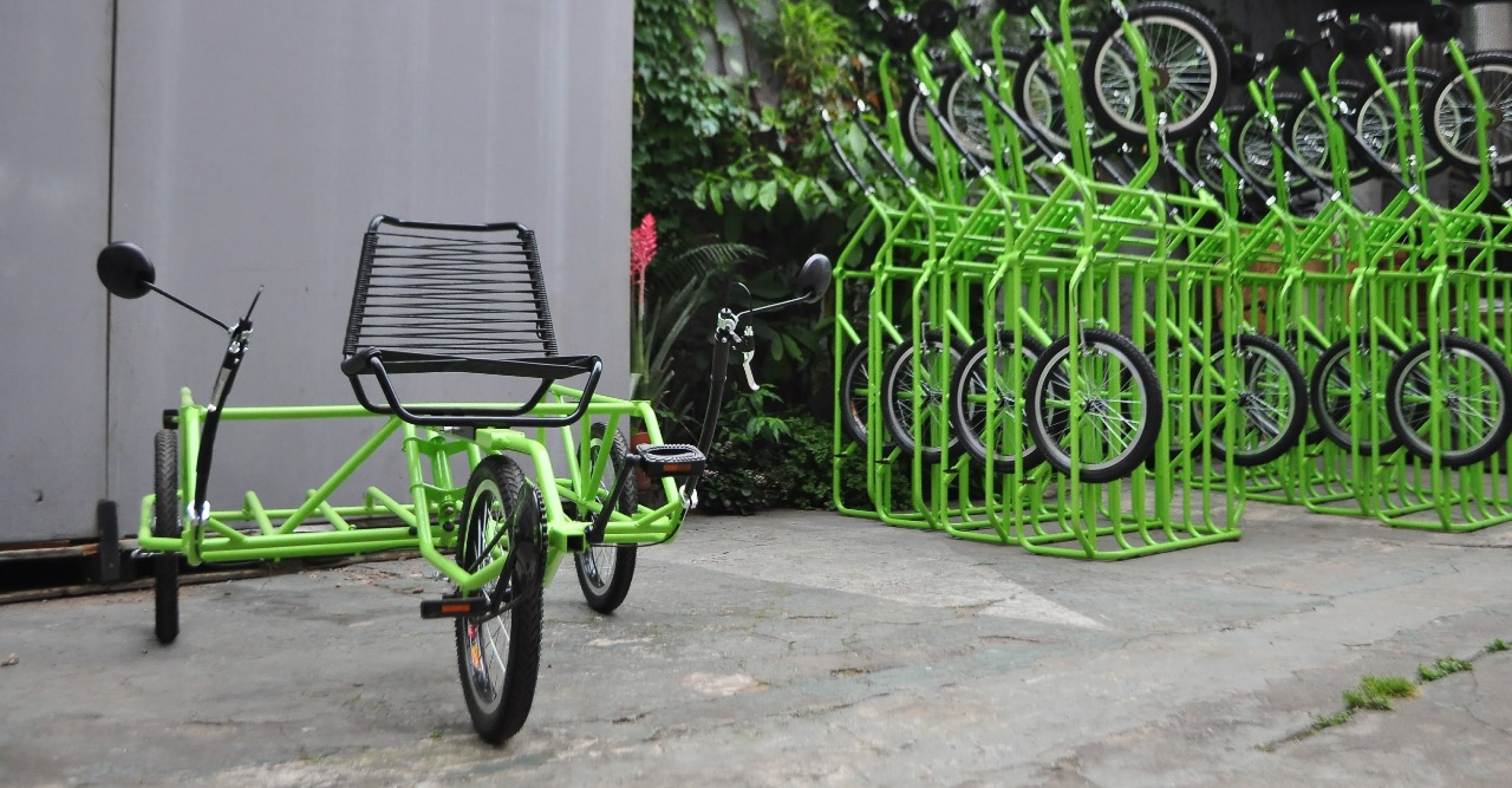
Torky Mobility was a small company, so my role was never just "industrial designer" in the narrow sense. I covered redesign and design iteration, construction optimization, supplier management, and physical prototyping — end to end.
The core product was a pedal cargo tricycle built for urban collectors: workers who previously relied on animal traction or manually pulling loaded carts. The vehicle's reason to exist wasn't aesthetic — it was to remove that physical burden entirely.
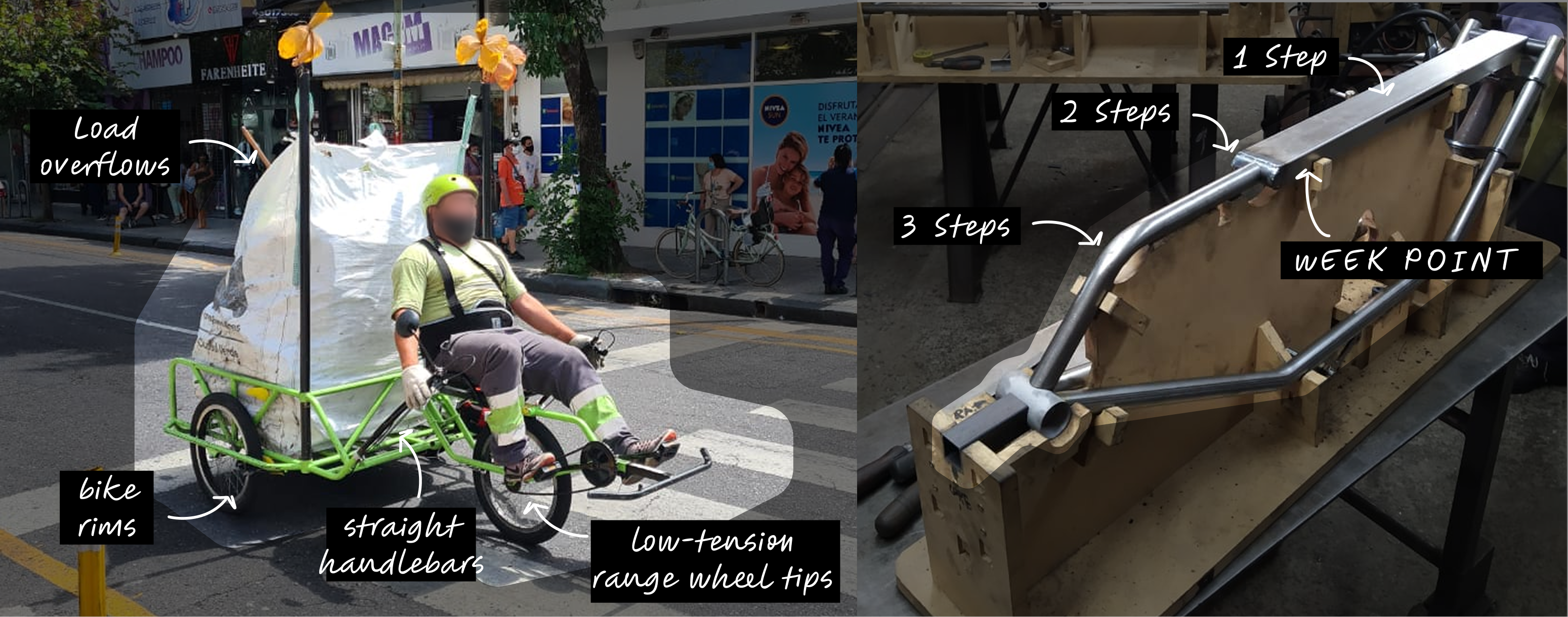
The real problem wasn't the design — it was whether we could keep building it
As sales volume grew, a bottleneck appeared in the workshop and across suppliers. Manufacturing and operating costs were tightening at the same time demand was increasing. The brief wasn't "make it better" in the abstract — it was "make it possible to keep producing this at scale without costs spiraling."
That reframed what "design" meant on this project: the highest-leverage design decisions weren't about form, they were about the construction process itself.
Simplifying manufacturing as a design decision
The original process required cutting, bending, welding, and painting the tubing — four separate operations, each with its own supplier and its own point of failure. I redesigned the structure so the same result could be achieved with just cutting, welding, and painting — removing an entire operation and a supplier dependency from the chain.
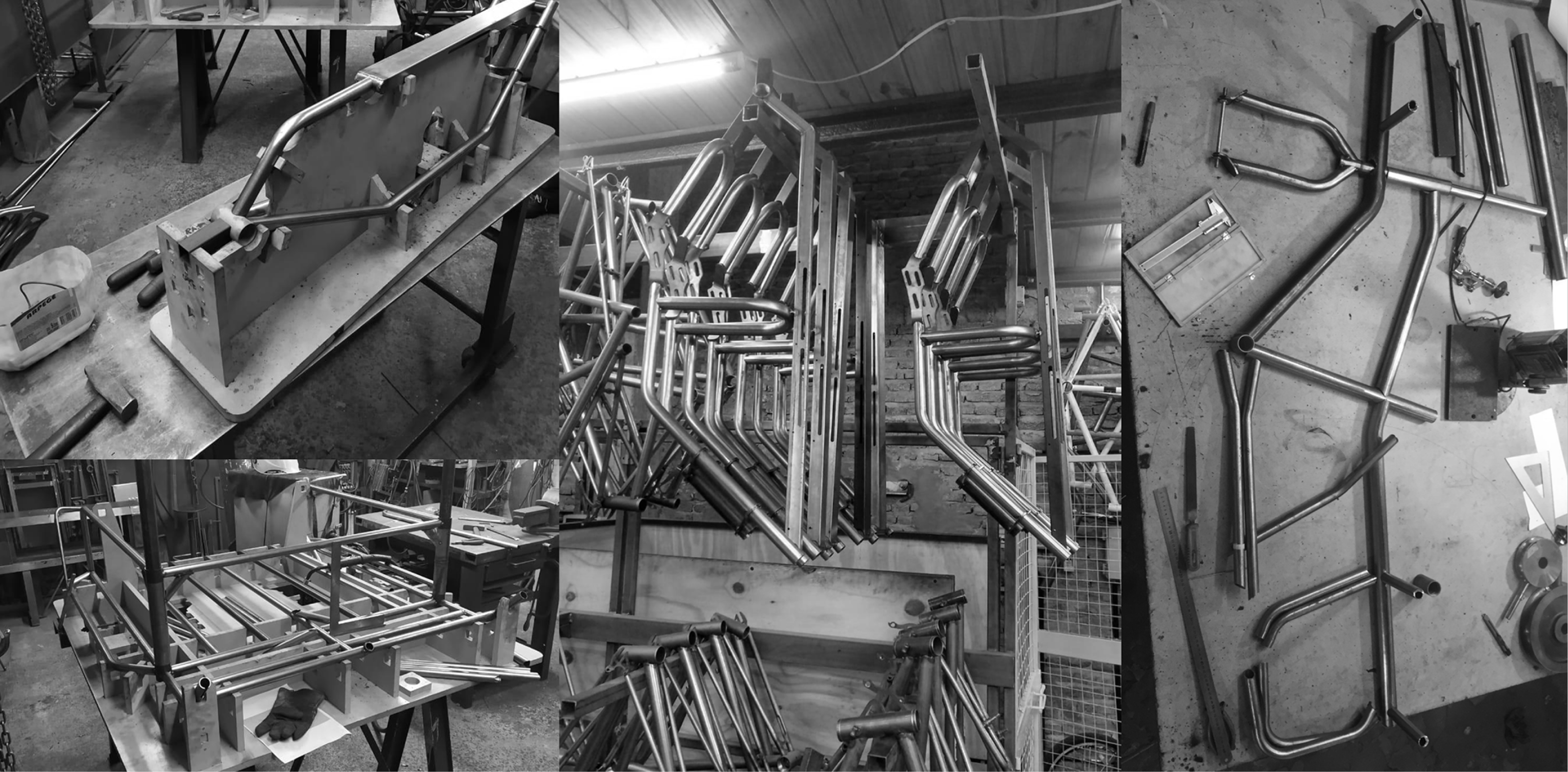
This wasn't a cosmetic change. It directly reduced the number of failure points in the supply chain and gave the workshop room to keep up with growing volume without a proportional cost increase.
The ergonomic tension: the ideal fix vs. the real one
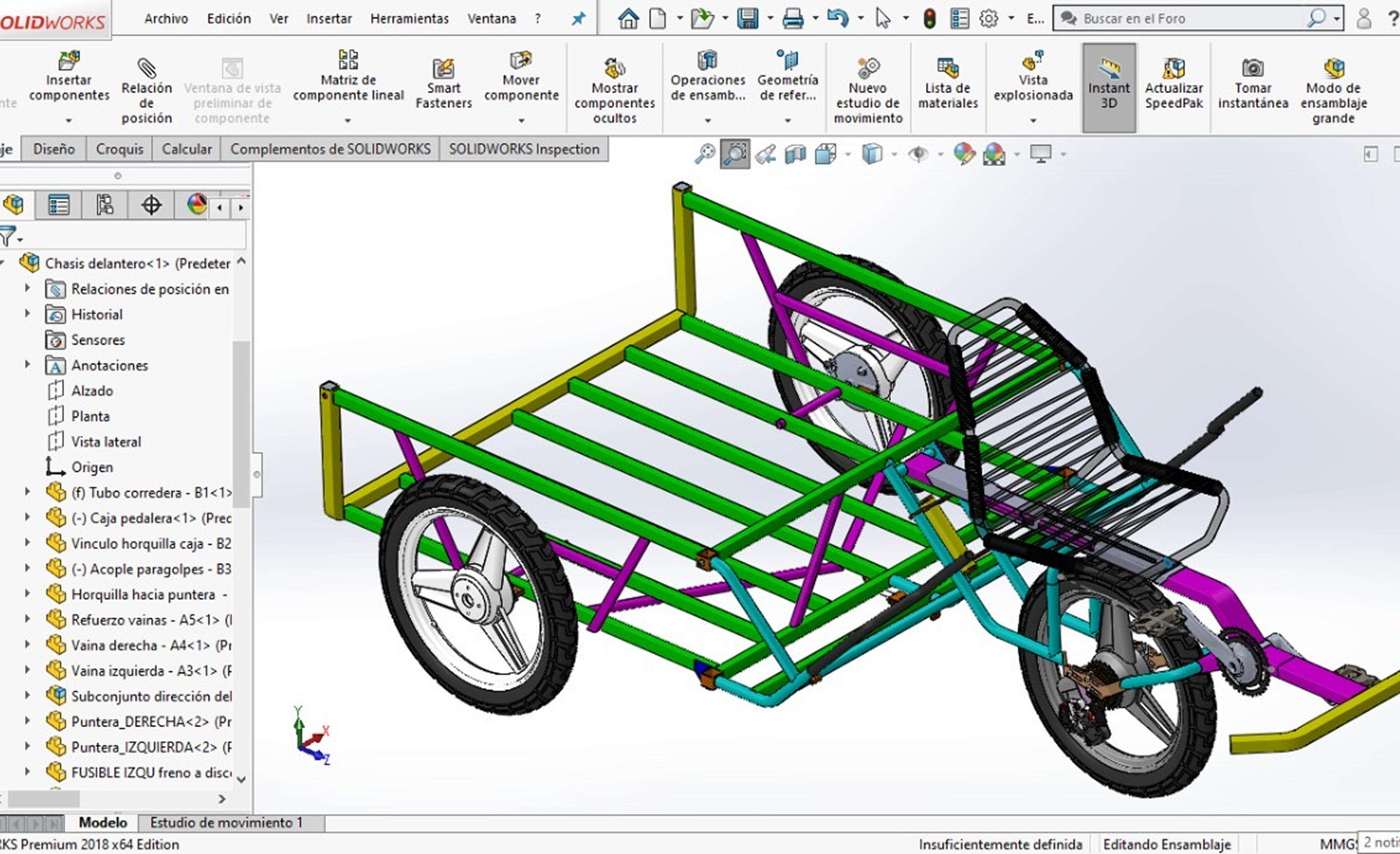
The tricycle's steering system required the rider to pivot their whole body over the seat to turn the front wheel — an unconventional setup that worked, but wasn't ideal for a workday that regularly ran nine hours.
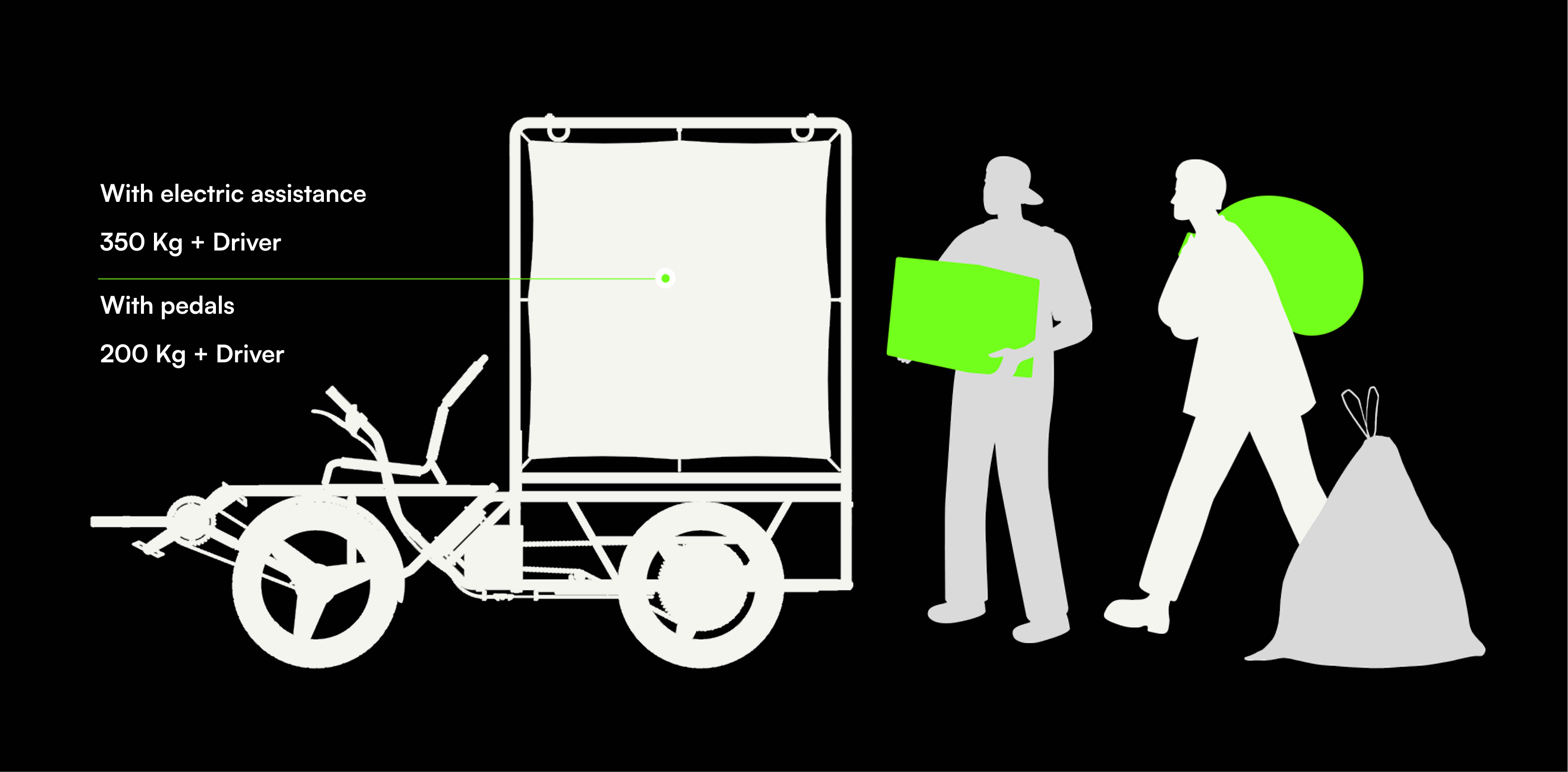
The obvious fixes were the ones I explored first: electric motor assistance, or a gear system. I went far enough to build a working prototype with a motor mounted on the wheel. Both directions got ruled out — not because they didn't work, but because they pushed cost and reliability in the wrong direction for this specific use case: heavy, continuous cargo work where a breakdown means a missed workday for someone with little margin to absorb it.
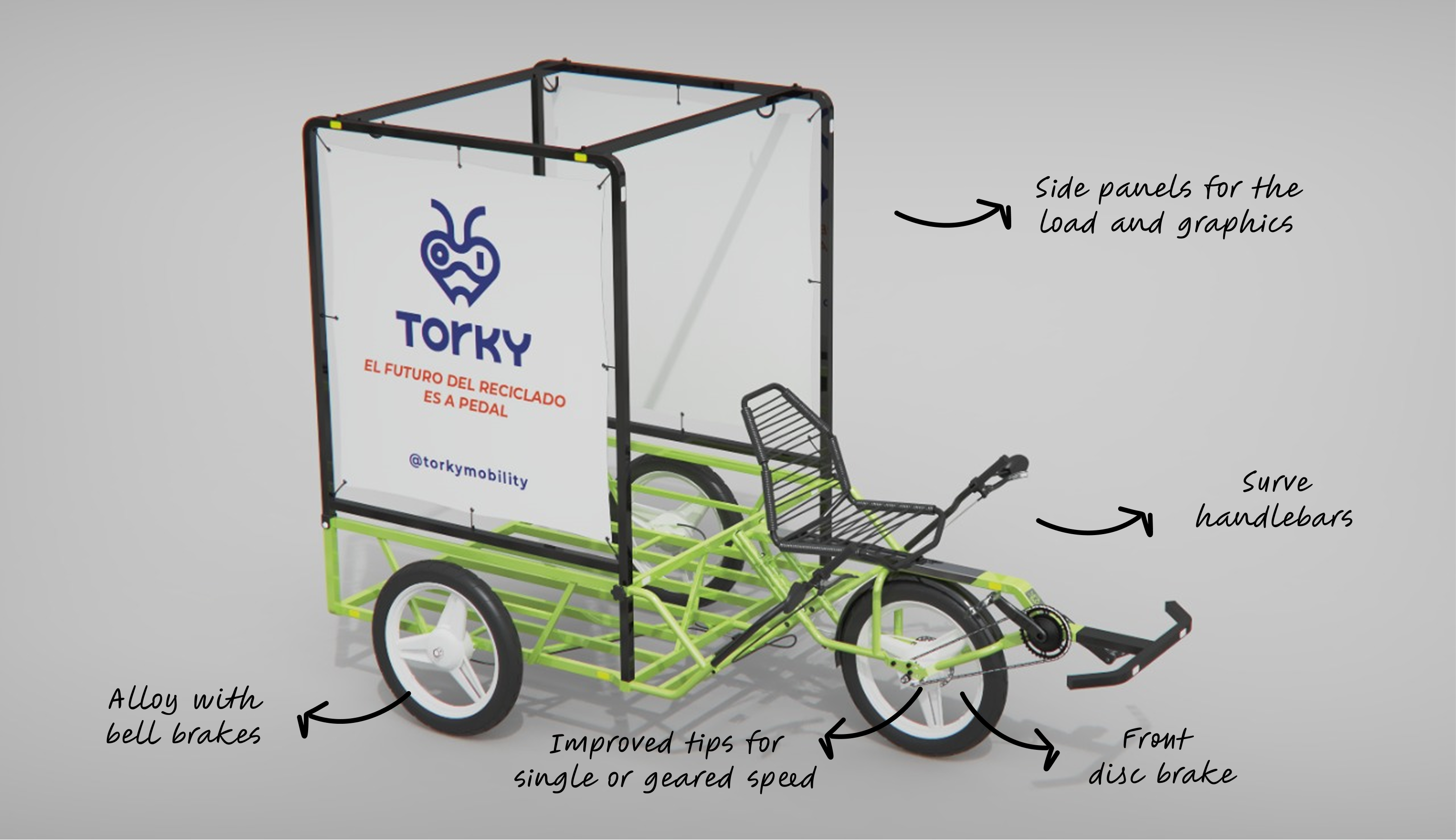
Instead, I focused on what was actually achievable within those constraints: a longer adjustment range on the seat rail to better fit different rider heights, and moving the body's attachment point closer to the rider, reducing how much force and reach the steering motion demanded.
A finding that ran against the obvious assumption
One decision looked contradictory on paper: switching to aluminum wheels, which don't reduce weight in a way that matters for a loaded cargo vehicle. But field use told a different story. Riders weren't breaking wheels from covering long distances — they were breaking spokes from repeated heavy loading on short, frequent, planned routes. The failure mode wasn't about how far the vehicle traveled, it was about how much weight it absorbed, over and over, in a tight radius.
That real-use pattern is what justified prioritizing load resistance over marginal weight savings — a decision that only made sense once I understood how the vehicle was actually being used, not how it was assumed to be used.
Outcome
The redesign reduced the manufacturing process from four operations to three, easing the supplier bottleneck that was limiting production volume. The ergonomic adjustments — seat travel and attachment point — improved fit across a wider range of riders without adding cost or new failure points. And the shift to more load-resistant wheels addressed the actual, observed failure pattern rather than a theoretical one.
This same approach — balancing ergonomics, cost, and manufacturing reliability against how a vehicle is genuinely used in the field — carried into later work at Torky on cargo bicycles and an electric pedal quadricycle.