STG Performance
Building a sub-brand: accessory line, sustainable packaging, and identity for Royal Enfield riders
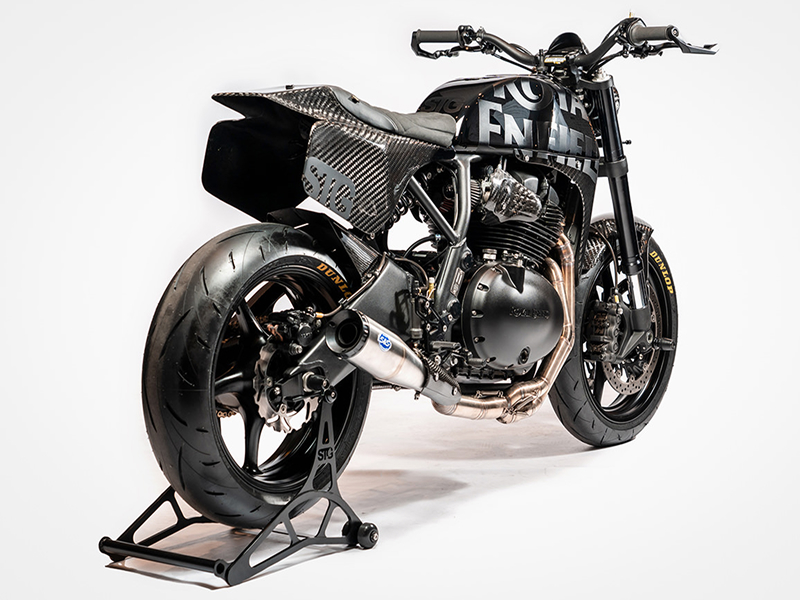
STG Tracker Bikes is a recognized custom motorcycle workshop. Beyond one-off custom builds, they asked me to develop something they didn't have yet: a standard accessory line for Royal Enfield motorcycles — a repeatable product, not a bespoke build.
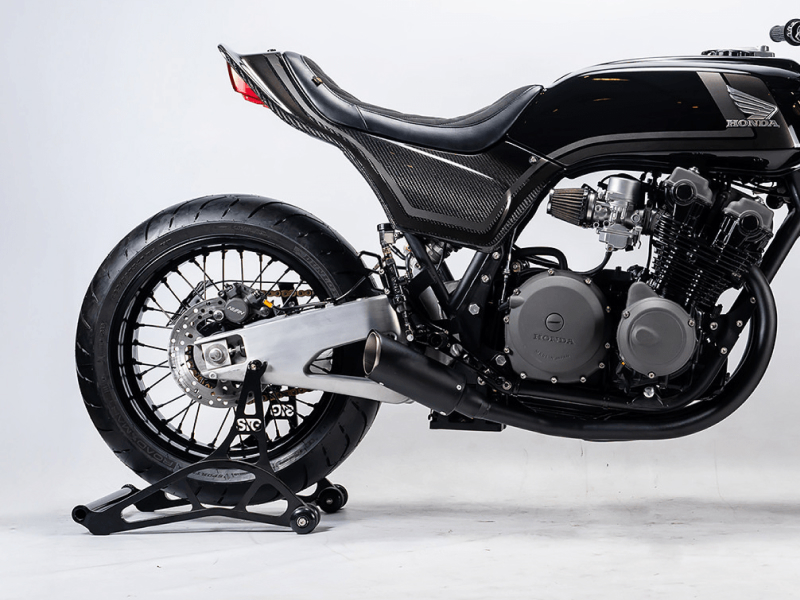
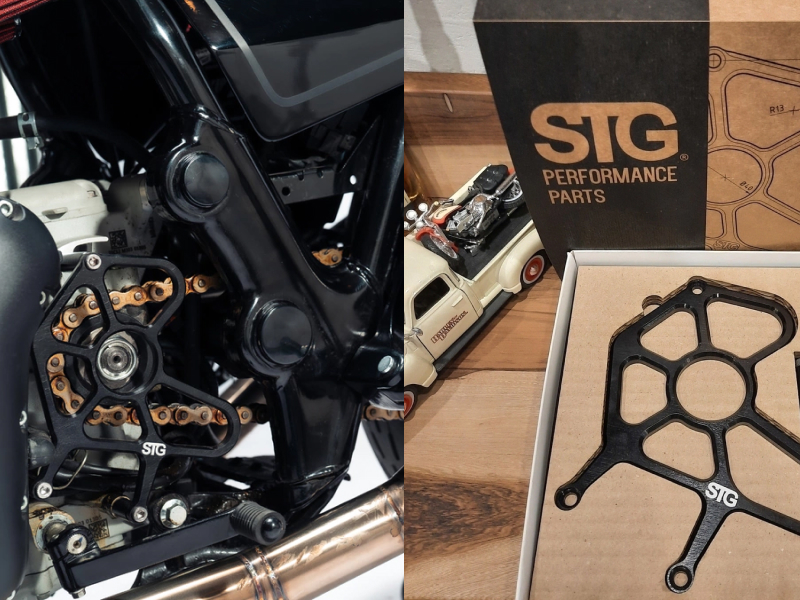
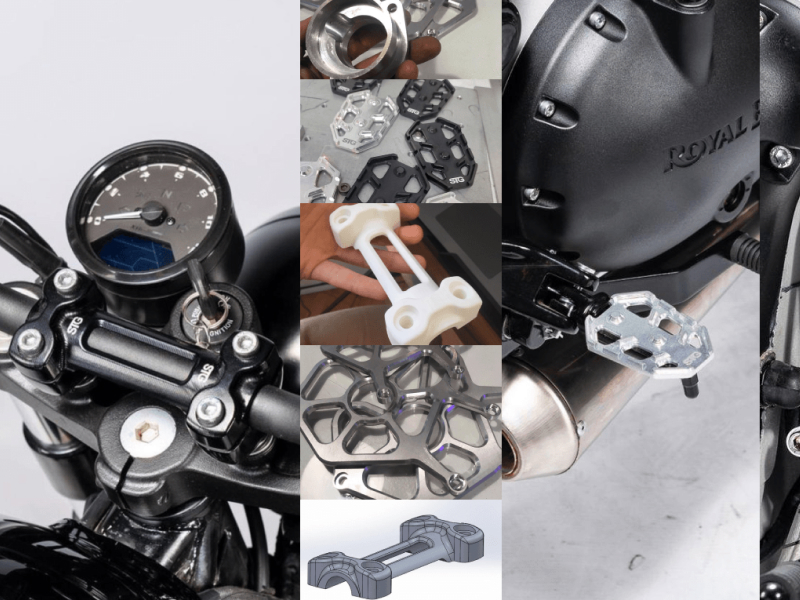
The brief was for a complete but basic line: a CNC handlebar clamp, a lightened sprocket cover, an air filter modification to improve intake flow, tracker-style footpegs, and a kickstand. Small components individually, but together they needed to function as a coherent product family — which meant this project was as much about building a brand as building parts.
Creating STG Performance as its own sub-brand
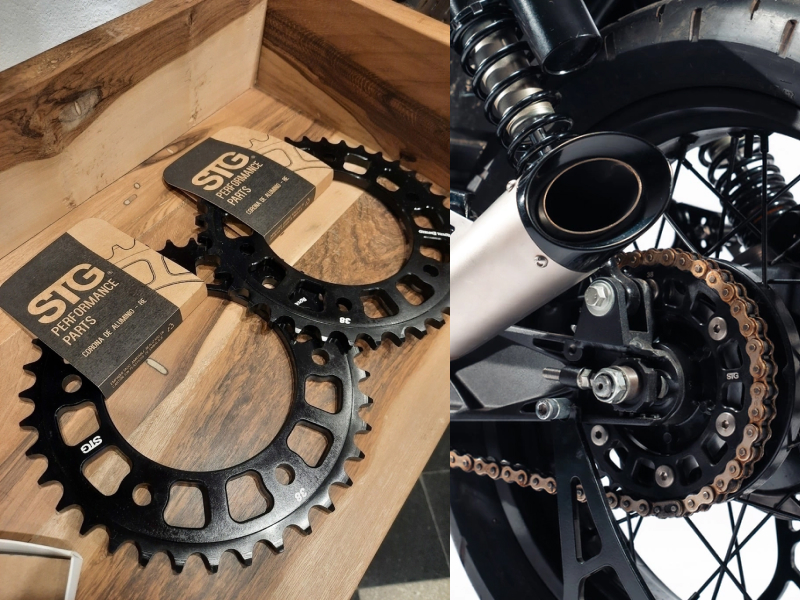
Rather than release the line under the workshop's general name, I proposed and built a dedicated sub-brand: STG Performance, with its own identity centered on materials, engineering, and technical optimization — even where a given piece was, honestly, more about visual character than a measurable performance gain. The sub-brand gave the line a consistent language across every touchpoint: the parts themselves, the packaging, and the presentation.
The packaging decision: sustainability as a design choice, not a constraint
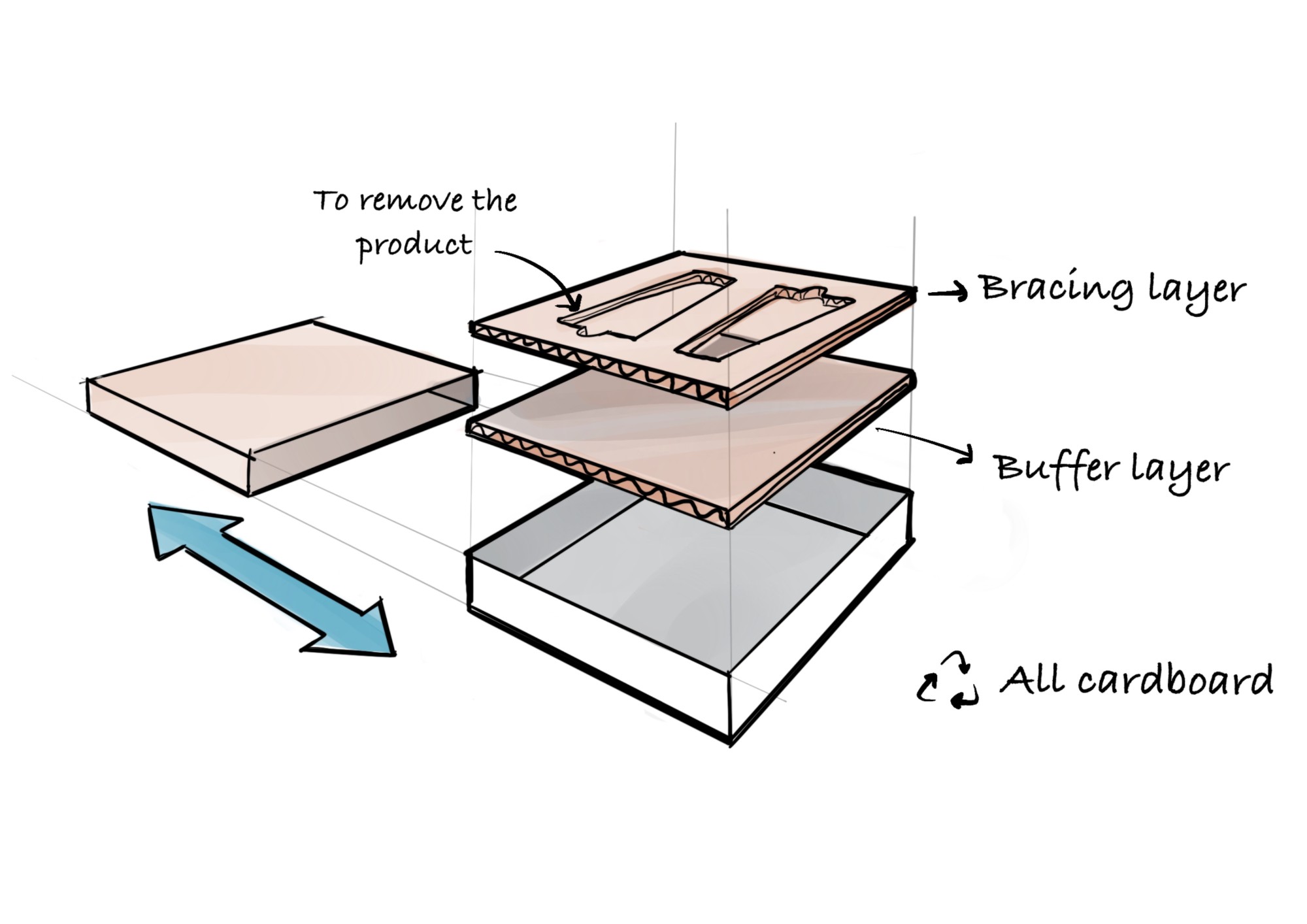
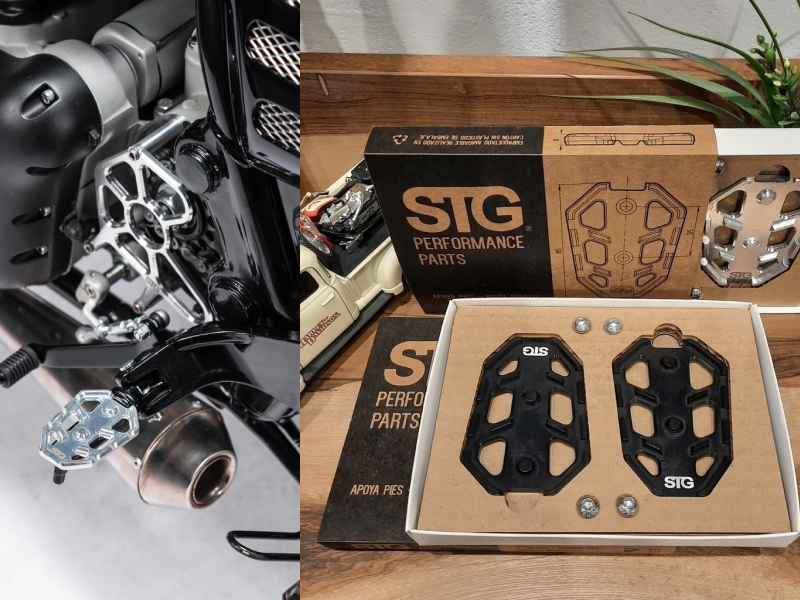
The eco-friendly packaging wasn't something the client asked for — it was something I proposed. I designed it as a single material, cardboard only, with no plastic components mixed in.
The reasoning was practical as much as it was environmental: a single-material package is easy to test and easy to scale to high volume without re-engineering the format. It also changed how the product felt on arrival — protected, deliberate, closer to how a performance or custom part should be presented, with a material that added its own character rather than looking generic. And because nothing was mixed with plastic, a rider could dispose of the packaging after installing the part without having to separate materials first — removing friction from doing the right thing, not just making it possible.
Making it work at both small and large scale
Confirming the concept was one thing; making it manufacturable at production volume was another. I had to adapt certain materials and production techniques so the same approach held up whether we were producing a small batch or scaling up — starting from a pilot run of 100 units — and negotiate quantities directly with both suppliers and the client to find a volume that made sense for everyone.
Outcome
STG Performance shipped as a coherent product line — not just five individual parts, but a sub-brand with its own visual identity, a packaging system designed around sustainability and presentation at once, and a production approach that could scale without breaking the original concept. It's a different kind of design problem than a one-off custom build: the deliverable wasn't a single object, it was a system that had to hold together across manufacturing, branding, and unboxing.